The Substitute's Advantage: Packaging US Sub Days for International ESL Roles in 2026

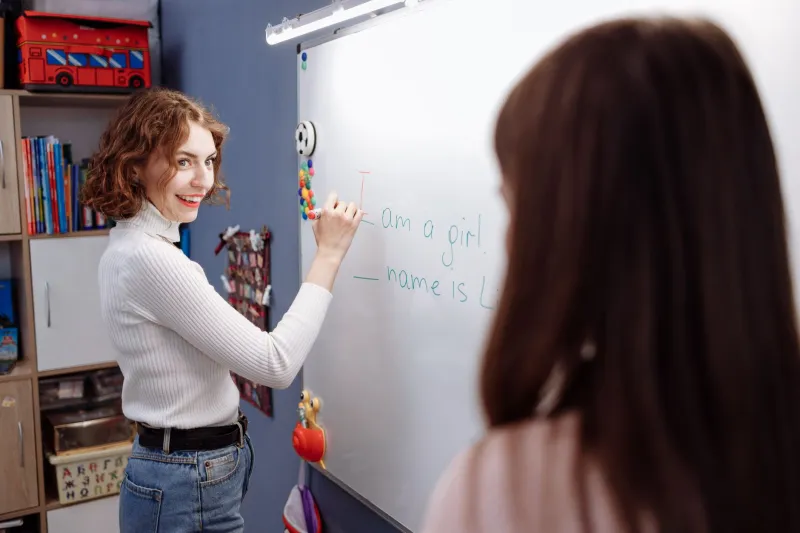
Photo: American substitute teacher classroom students ESL teaching abroad job search, via img.freepik.com
If your teaching history reads like a patchwork of school names and grade levels, you're not alone. Plenty of US substitute teachers want to teach English abroad but worry that a stack of day-to-day assignments will look thin next to candidates with full-time contracts. The concern is fair. Subbing is not the same as owning a class for a year. But it is also not empty space on a résumé. In 2026, overseas schools are hiring for classrooms that need adults who can walk in, read a room, follow a plan, and stay calm when the plan changes. That is basically the substitute teacher job description.
The key is translation. You do not need to inflate your experience. You need to show hiring teams what your experience actually proves.
What Overseas Hiring Teams Are Really Scanning For
When a recruiter opens your application, they are not grading your job titles in a vacuum. They want signals: Can this person manage a group of students? Can they adapt when materials are wrong or the regular teacher's notes are thin? Can they work with different ages? Will they show up reliably? Subbing gives you evidence for all four, if you write it down with specifics.
Vague lines like 'Covered classes as needed' do little. A line like 'Delivered prewritten lessons across K–5 classrooms in four schools, maintaining routines for classes of up to 30 students' gives a hiring manager something to picture. Neither line claims you were the teacher of record. The second simply explains the work.
Three Kinds of Currency You Already Have
Classroom management with incomplete information
Subs rarely get a full week of relationship-building before the door closes. You learn to establish presence fast: names, seating, voice level, a simple opening task, clear expectations. That skill matters in language institutes and bilingual schools where new teachers often face groups of 20 or more. In your materials, describe one or two routines you used to settle a class. 'Started each session with a five-minute warm-up and a visible agenda' sounds small, but it tells a hiring team you think in systems.
Lesson adaptation when the plan falls apart
Any sub knows the feeling: the worksheet is missing, the projector is dead, or the regular teacher's plan assumes students already know something they don't. Adapting on the spot is not a soft skill overseas; it is daily work. On paper, show that you can follow a curriculum and adjust it without losing the objective. A useful resume bullet is 'Adapted prepared lesson plans for mixed-ability classes and substituted short activities when original materials were unavailable.' Keep it true. If you only covered two grades, say two grades.
Age-group flexibility
US subs often work across elementary, middle, and high school. That range can be an asset, especially for language centers and after-school academies that serve multiple age groups. But do not just list 'K–12.' Explain what you did with those ages. 'Covered elementary literacy blocks and high school study halls' is clearer than a broad range. If you have worked mostly with one age group, lean into that instead. Schools appreciate focus too.
Put It on the Résumé Without Stretching the Truth
Move substitute teaching out of a catch-all 'Other Experience' section and into 'Teaching Experience.' Use the same verbs as classroom teachers, but keep the scope honest. Safe verbs include delivered, facilitated, maintained, adapted, supported, supervised, and assessed. Only use assessed if you actually reviewed student work or checked understanding.
Here is a simple structure: district or agency, date range, grade levels, number of schools, typical class size, and two or three concrete duties. Mention English learners only if you genuinely worked with them. Mention IEP or 504 support only if you followed those plans. Hiring managers can spot a padded résumé, and overseas reference checks can expose it fast.
If you have a TEFL certificate, put it near the top. If you are mid-course, list the completion date. Do not call yourself an ESL teacher because you subbed in a district with ELL students. Call yourself a substitute teacher with classroom experience and a TEFL credential in progress. That is credible.
Pick References Who Actually Saw You Teach
A reference call is not a formality. Schools want to know whether you are reliable and whether you can handle a room. Choose people who have seen you work: a teacher whose class you covered repeatedly, a building administrator who observed you, or a substitute coordinator who can speak to your record. A principal who met you once at orientation is not a strong reference.
Brief your references. Send a short email with two or three examples you want them to remember: the time you stabilized a difficult class, the day you adapted a lesson with no materials, the week you covered multiple grade levels. Ask them to speak to specific skills, not just say you are nice. That is not scripting; it is helping busy people remember accurate details.
Demo Lessons: Show Control, Not Theater
Subs sometimes overcorrect in demo lessons. They build a circus because they worry that their résumé lacks a full-time classroom. Hiring managers are not looking for a Broadway show. They are looking for clear instructions, appropriate pacing, checking for understanding, and a backup plan. A strong demo shows that you can get students talking, keep them on task, and adjust if they are lost.
Choose an activity you can actually run in the time allowed. Include a short warm-up, one clear objective, a guided practice step, and a quick wrap-up. If you are teaching online, show that you can manage a screen, a chat, and a quiet student all at once. In the interview, say plainly: 'I have subbed across these grades, so I am comfortable changing pace when a group is struggling.' That is more convincing than claiming years of full-time lead teaching you do not have.
Where This Background Travels Furthest in 2026
Sub experience tends to carry weight in language institutes, after-school academies, and conversation programs that need teachers to manage groups and follow a set curriculum. In places like Vietnam, Taiwan, South Korea, Japan, China, and Thailand, private language centers often hire for classroom presence and adaptability. Degree and visa rules vary, so check the specific employer and country requirements before you apply.
Assistant and co-teacher programs, such as language assistant roles in Spain or ALT-style positions in parts of Asia, also value comfort with groups and age-group flexibility. These are usually support roles, not lead teacher positions, and the pay and contract terms differ. In Latin America and parts of Eastern Europe, private bilingual schools sometimes hire teachers for support or co-teaching roles when they show strong classroom management.
International schools are a different category. Most want a full teaching license, a content-specific background, and full-time lead classroom experience. Subbing alone rarely clears that bar. In the Gulf, licensed school roles usually expect credentials and prior full-time teaching. Sub experience can help for teaching assistant or cover roles, but do not apply to a licensed lead position and assume your sub days will carry it.
The Gap Most Sub Teachers Still Need to Close
Here is the honest part: many subs have classroom hours but not a complete teaching cycle. You have delivered other people's plans. You may not have designed a unit, assessed student growth, and adjusted instruction based on the results. That is the gap that matters most in 2026, especially for employers choosing between candidates with similar classroom management.
Close it with one small, owned teaching project. Tutor a small group for six to eight sessions. Run a short ESL conversation course through a community center. Teach a virtual mini-unit to adult learners. Volunteer at a summer camp or after-school program. Plan the lessons yourself, teach them, collect anonymized student work or feedback, and write a one-page reflection on what you changed. That artifact gives you something subbing cannot: proof that you can own the full cycle, not just survive the day.
You do not need a full year of lead teaching to apply. You do need to show what you can do. Substitute teaching gives you real classroom evidence. Package it precisely, choose references who saw it, practice a demo that shows control, and close the planning gap before you hit send. In 2026, overseas hiring teams are not looking for perfect résumés. They are looking for adults who can handle the room.